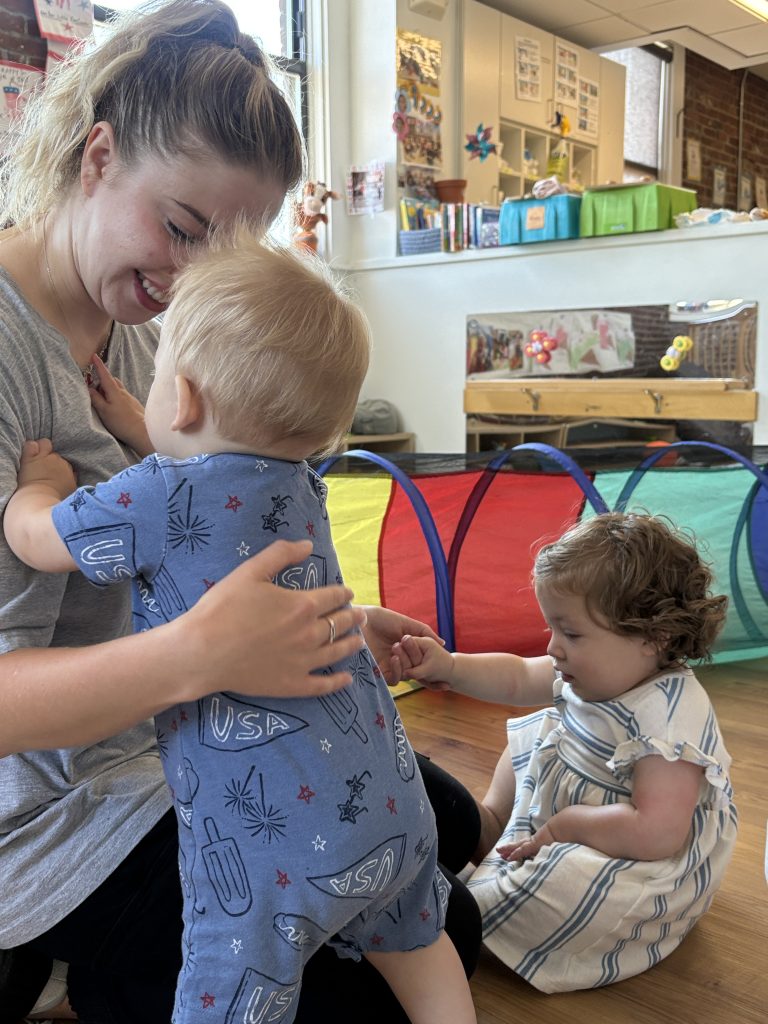
Children learn trust before they learn anything else.
Not trust as an abstract concept, but trust built through hundreds of small, everyday moments —a caregiver responding to their cries, a familiar face greeting them each morning, a comforting hug after a difficult moment, a predictable routine that helps them understand the world.
Many parents eagerly await first words, first steps, and other visible milestones. But before those moments arrive, children are already developing something even more fundamental: a sense of trust.
But how does a child learn trust?
The First Building Blocks
- Being comforted when upset
- Hearing a caregiver respond to their babbles
- Predictable routines
- Warm greetings and goodbyes
These moments may look ordinary, but they teach children something profound: I am safe here.
Why Trust Matters
When children feel safe, they are more willing to explore, ask questions, take risks, form friendships, and engage with the world around them.
Trust becomes the foundation for confidence, independence, resilience, and learning.
The Role of Early Childhood Educators
- Teachers aren’t just teaching letters and numbers
- They are helping children build secure relationships
- They create environments where children feel seen, valued, and understood
What Parents Can Remember
- Not every important milestone is visible
- Some of the most meaningful growth is happening beneath the surface
- A child who feels safe and loved is already building a strong foundation for the future
When we think about preparing children for the future, it’s easy to focus on the skills they will need someday. But the foundation was built much earlier.
Before a child takes their first step or speaks their first word, they are already learning to trust. And from that trust grows confidence, curiosity, resilience, and a lifelong love of learning.
The architecture of a child’s future begins there.
At Ethos, we provide high-quality childcare and early childhood education for infants, toddlers, and preschoolers in South Boston, MA. Our research-driven, nurturing approach supports each child’s development while partnering closely with families. Looking for infant care, toddler daycare, or preschool in South Boston? Request more information here.
References
1. Serve and Return Interaction Shapes Brain Circuitry Organization: Center on the Developing Child at Harvard University https://developingchild.harvard.edu/key-concept/serve-and-return/
2. Caring Relationships: The Heart of Early Brain Development
Organization: National Association for the Education of Young Children (NAEYC) May 1, 2017
https://www.naeyc.org/resources/pubs/yc/may2017/caring-relationships-heart-early-brain-development
3. InBrief: The Science of Early Childhood Development
Organization: Center on the Developing Child at Harvard University